What Is Craft Tequila? It’s Probably Not What You Think.
Traditional methods, industrial efficiency, and the six principles that separate genuine craftsmanship from clever marketing.
Picture a traditional tequila distillery.
Freshly harvested agave is stacked outside an old brick oven. Steam escapes through the doors as the cooked agave is unloaded. A massive stone wheel slowly crushes the softened plants. Fermentation tanks bubble with activity, and copper pot stills turn the fermented liquid into tequila.
It’s a beautiful process. It’s also the kind of imagery tequila brands love to use in their marketing.
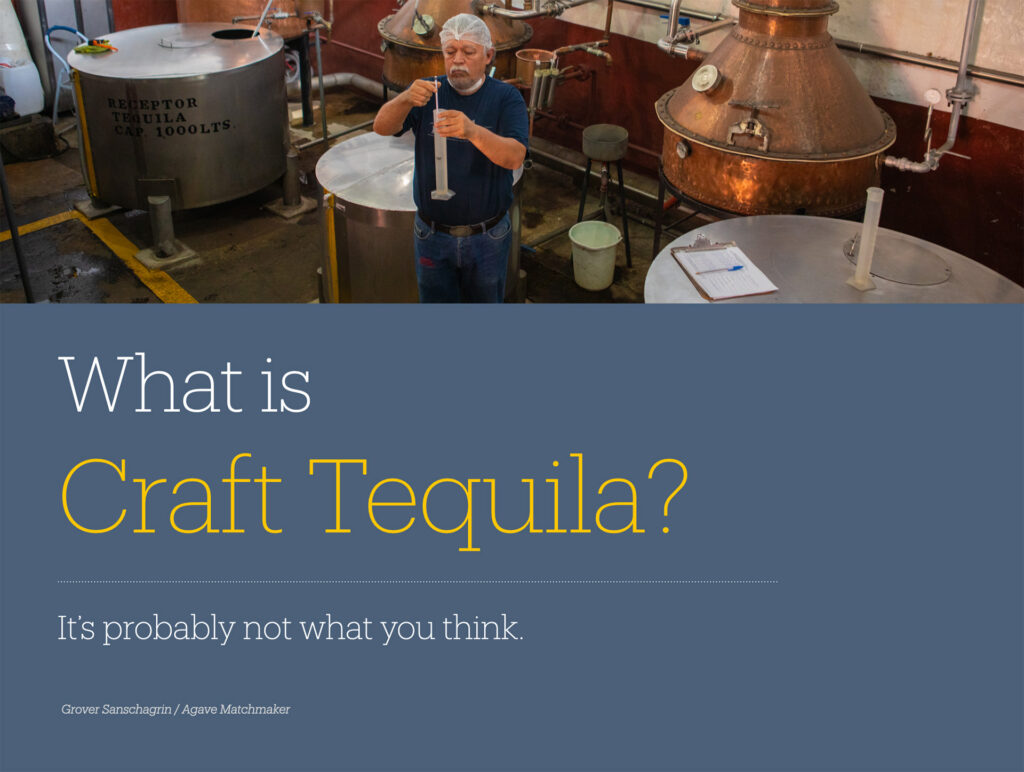
Does a picture of traditional tequila production mean the tequila inside the bottle was actually made that way?
Not necessarily. The tequila industry has changed dramatically over the years. Modern technology has made it possible to produce enormous quantities of tequila faster, more efficiently, and at a lower cost than ever before.
Yet much of the industry’s marketing continues to celebrate the romance of traditional production.
That creates a disconnect between how tequila is made and how it is presented to consumers, and it raises an even more important question.
What does it actually mean for a tequila to be “craft”?
There is no official craft tequila category under Mexico’s tequila regulations. The word is widely used, but it has no universally accepted definition.
So we’re going to propose one.
Not based on the size of a distillery, the appearance of its equipment, or the number of bottles it produces. Instead, we’ll focus on something more meaningful: control, transparency, and integrity of production.
But first, we need to understand how different tequilas are made.
Three Very Different Ways to Make Tequila
Tequila production generally follows the same basic sequence: harvesting agave, converting its carbohydrates into fermentable sugars, extracting those sugars, fermenting them, and distilling the resulting liquid.
But the methods used at each stage can be dramatically different. For educational purposes, we can group these methods into three broad approaches: artisanal, modern, and industrial.
These aren’t official regulatory classifications, and many distilleries combine methods from different groups. But they help illustrate the trade-offs between tradition, efficiency, and flavor development.
The Artisanal Approach
Traditional tequila production often involves cooking agave in brick or stone ovens, extracting the sugars with a tahona, fermenting in open tanks, and distilling in copper pot stills.
These processes are generally slow and labor-intensive.
A tahona, for example, uses a massive stone wheel to crush cooked agave. It requires considerable space, equipment, time, and labor compared with modern extraction systems.
Traditional ovens may take many hours to cook the agave, followed by additional time for cooling.
Open fermentation introduces another variable. Yeast activity, temperature, microbial populations, and fermentation duration can influence the compounds produced.
These methods aren’t necessarily efficient. But efficiency isn’t always the objective.
A craft-oriented process prioritizes the development and preservation of aroma, flavor, and complexity, even when doing so requires more time and expense.
The Modern Approach
Modern tequila production can use autoclaves for cooking, roller mills for extraction, stainless steel fermentation tanks, and various types of pot stills.
These technologies can reduce production time and improve operational control while preserving much of the character associated with traditionally produced tequila.
An autoclave still cooks the agave using heat and steam. A roller mill can extract juice efficiently without eliminating the compounds developed during cooking. Stainless steel fermentation tanks can provide a clean, controllable environment while still allowing yeast to produce a complex range of fermentation congeners.
There’s nothing inherently incompatible between modern equipment and craft production. A producer can use modern technology thoughtfully, without sacrificing the character of the agave. This is why the definition of craft needs to go beyond a checklist of traditional equipment.
The Industrial Approach
Industrial tequila production is typically designed around maximizing efficiency, throughput, and consistency.
Large-scale operations may use diffusers, accelerated hydrolysis, highly controlled fermentation systems, and continuous column distillation.
These technologies can produce enormous volumes of tequila with relatively little labor. And they can dramatically reduce the amount of agave required to produce a liter of finished spirit.
Industrial production isn’t inherently bad. It serves a market that values affordability, availability, and consistent flavor. But in our proposed definition, industrial efficiency alone isn’t craftsmanship.
The important question is what production choices are being made, and what is being sacrificed to achieve that efficiency.
The Diffuser Changes More Than Efficiency
One of the clearest examples is the diffuser.
In traditional tequila production, agave is cooked before its sugars are extracted.
Cooking serves an essential chemical purpose. Agave stores much of its carbohydrates as fructans, which must be broken down into fermentable sugars.
But cooking does something else. Heat also creates and transforms aroma and flavor compounds through reactions including caramelization and Maillard chemistry.
These reactions contribute to the complex character we associate with cooked agave. A diffuser reverses the traditional sequence.
Instead of cooking whole agave first, the diffuser extracts carbohydrates from raw agave using hot water and mechanical processing. The extracted liquid is then treated to convert those carbohydrates into fermentable sugars, sometimes using acid hydrolysis.
This is extremely efficient. Diffuser extraction can recover a very high proportion of the available carbohydrates, reducing the amount of agave needed for production.
But the chemistry isn’t identical to cooking whole agave in an oven.
The raw-agave extraction process bypasses much of the traditional cooking environment in which sugars, amino compounds, and plant material interact over an extended period.
Depending on the subsequent hydrolysis and heating methods, the resulting liquid may contain a different mixture of aroma and flavor precursors.
That doesn’t mean every diffuser-produced tequila tastes the same, or that the equipment automatically determines the quality of the finished product.
Production methods influence what flavors are created, what compounds survive, and what character ultimately reaches the bottle.
Efficiency has consequences, and those consequences can be sensory.
Fermentation Is About More Than Alcohol
The same principle applies to fermentation.
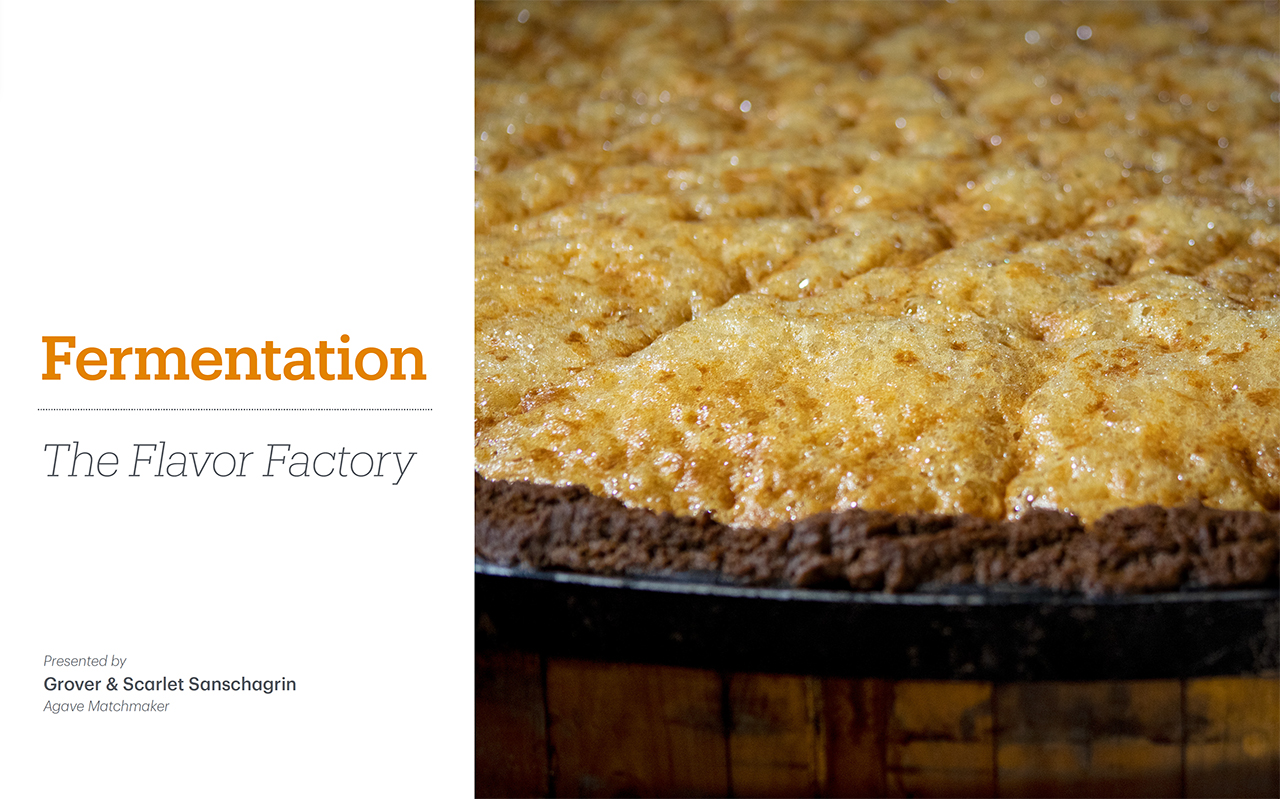
The obvious purpose of fermentation is to convert sugar into ethanol. But, yeast doesn’t produce alcohol alone.
During fermentation, yeast metabolism also generates numerous other compounds, including esters, higher alcohols, organic acids, aldehydes, and glycerol. These compounds influence aroma, flavor, texture, and the overall personality of the tequila.
Some esters contribute fruity or floral aromas. Higher alcohols can contribute complexity at appropriate concentrations, while excessive levels may create harsh or solvent-like notes.
The conditions under which fermentation takes place matter enormously.
Temperature, yeast strain, oxygen availability, nutrient concentration, fermentation duration, and the presence or absence of agave fibers can all influence the resulting chemical profile. A producer focused entirely on speed might optimize fermentation primarily for rapid and reliable ethanol production.
A craft-oriented producer may place greater emphasis on the secondary compounds that give the finished tequila its distinctive character.
These aren’t mutually exclusive objectives. A carefully managed fermentation can be both efficient and flavorful. But the distinction illustrates why production philosophy matters.
Making alcohol is relatively straightforward. Creating a distinctive spirit requires much more attention to what happens along the way.
The Production Detail You Won’t Find on the Label
There’s another issue that makes defining craft tequila especially complicated.
Bulk tequila.
Under the tequila industry’s regulatory framework, a distillery can purchase finished tequila from another distillery and sell it under its own brand, subject to applicable requirements. And consumers aren’t necessarily told that the tequila was purchased from a third party.
This means a brand’s story may be quite different from the story of how its tequila was actually produced.
A brand can have beautiful packaging, photographs of agave fields, stories about family traditions, and marketing language celebrating artisanal craftsmanship. But who actually made the tequila? Who selected the agave? Who decided how it would be cooked, extracted, fermented, and distilled? And who is responsible for the quality and character of the finished product?
For us, a brand that purchases bulk tequila without controlling how it was produced cannot make the same claim to craftsmanship as a producer who oversees the process from beginning to end.
This doesn’t mean bulk tequila is necessarily poor quality. It means the source of the product and accountability for its production matter.
Craft is about making something, not simply buying something and putting your label on it.
So How Should We Define Craft Tequila?
We believe craft tequila can be understood through six fundamental principles. This is our proposed definition, not an official designation or certification. And importantly, it’s not intended to suggest that every tequila outside this framework is bad. It’s just a way of identifying a particular philosophy of production.
1. Ownership and Control
A craft tequila should be produced and owned by the distillery, with production decisions controlled by the producer.
There can be special circumstances where a brand exercises genuine control over production at a facility it doesn’t own.
The people responsible for the product must have meaningful authority over how it is made.
If a brand cannot control the raw materials, cooking, fermentation, distillation, and other important production decisions, how can it guarantee that its specifications are being followed?
Ownership and control create accountability. And accountability is essential to craftsmanship.
2. Production Integrity
A craft tequila should not rely on purchased bulk tequila, third-party distillate, or third-party ingredients used to construct its finished flavor profile.
The character of the tequila should be created through the producer’s own production decisions.
When a producer controls the process, there is a direct relationship between its methods and the resulting aromas and flavors. When a brand purchases finished distillate, much of that relationship disappears.
Production integrity means being responsible for what goes into the bottle, not merely for how the bottle is marketed.
3. Non-Reliance on Additives
Tequila regulations permit certain ingredients, commonly called abocantes, to be used under specified conditions.
These can include substances intended to influence color, sweetness, aroma, or flavor. In some products, additional flavor adjustments are used to make the tequila smoother, sweeter, or more consistent.
A producer can spend years developing a distinctive production process, only to replace or obscure some of its resulting character through flavor adjustments.
We believe craft tequila should derive its aroma and flavor from the agave, cooking, fermentation, distillation, and maturation processes rather than from added flavoring or smoothing agents.
That doesn’t mean consistency is unimportant. It means consistency should be achieved through skilled production and blending, not by artificially constructing the same flavor every time.
4. Natural Variation
Agave is an agricultural product. No two harvests are exactly alike.
Sugar concentrations, maturity, growing conditions, weather, and other variables change from one harvest to another.
Fermentation introduces additional variation, as do distillation and barrel maturation.
A skilled producer can manage these differences and maintain a recognizable house style.
But should every batch taste absolutely identical? We don’t think so.
In our definition of craft, consistency in quality is important, but natural variation should be accepted as part of the product’s identity.
One batch might have slightly more citrus. Another might show more pepper, earth, or fruit. These differences aren’t necessarily defects. They can be evidence that the tequila remains connected to its agricultural origins and production process.
Craftsmanship is about managing nature, not erasing it.
5. Transparency
A craft producer should be willing to explain how its tequila is made.
Where does the agave come from? How is it cooked? What extraction method is used? How does fermentation work? What type of still is used? Is the tequila made entirely at the named distillery? These aren’t unreasonable questions.
And the answers should be accessible, whether through labels, distillery tours, published production data, or direct communication with the producer.
Transparency doesn’t require revealing proprietary recipes or confidential business information. It means providing enough information for consumers to understand the product they’re buying. A producer who takes pride in its methods should have good reason to share them.
6. Agave Is Center Stage
Finally, there’s the sensory experience.
A craft tequila should allow the character of agave and the production process to remain recognizable.
That doesn’t mean every craft tequila must taste the same. Quite the opposite.
Cooking methods, fermentation conditions, still design, distillation cuts, and maturation decisions can produce dramatically different aroma and flavor profiles.
Some tequilas are earthy and mineral. Others are fruity, herbal, peppery, floral, or rich with cooked-agave sweetness.
The point isn’t to establish one approved flavor profile. It’s to preserve the relationship between the agricultural ingredient, the production decisions, and what the consumer experiences in the glass.
The agave should be more than a source of fermentable sugar. It should be the foundation of the tequila’s identity.
Can You Taste Craftsmanship?
This brings us to an interesting challenge.
If craftsmanship is about production decisions, can we actually recognize those decisions through aroma and flavor? Sometimes we can detect characteristics associated with particular methods. But tasting alone cannot prove that a tequila meets all six principles.
You cannot reliably determine who owns a distillery, whether a brand purchased bulk tequila, or how much production control it exercises simply by smelling a glass. That’s why transparency and production information are so important.
Still, tasting can help us understand how different methods contribute to different sensory profiles. Let’s consider two tequilas that we personally associate with craft production.
Zumbador Blanco: Multiple Methods, One Distinctive Character
Zumbador Blanco is produced at NOM 1643 in Jesús María, Jalisco.
Its production combines traditional and modern methods.
The agave is cooked in brick ovens, then extracted using both a roller mill and a tahona.
Fermentation takes place in stainless steel and wooden tanks, in open-air conditions, with some fermentations including agave fibers and others without.
The tequila is distilled twice using copper and stainless steel pot stills.
This combination is a good example of why craft shouldn’t be defined exclusively by one piece of equipment.
The producer uses different technologies at different stages, while preserving a production approach that emphasizes agave character.
In our tasting, we look for notes including agave, pepper, vegetation, earth, minerals, grass, citrus, anise, mint, fruit, and herbs.
It’s a complex collection of aromas and flavors, illustrating how many different sensory characteristics can exist within a blanco tequila.
Trujillo Manifiesto 56: A Different Expression of Agave
Trujillo Manifiesto 56 is produced at NOM 1634 in Capilla de Guadalupe, Jalisco.
It uses single-estate agave from the Los Altos region of Jalisco, cooked in brick ovens and crushed with a tahona.
Fermentation takes place in open stainless steel tanks without agave fibers, using spontaneous fermentation.
The tequila is then distilled twice in copper pot stills.
According to the production details presented, it is also distilled with agave fiber and rested in stainless steel for six months.
Bottled at 46.3% alcohol by volume, it offers a different sensory experience from Zumbador.
Our tasting notes include agave, pepper, minerals, citrus, earth, flowers, cinnamon, herbs, mint, brine, anise, vegetation, lemon, and honey.
Both tequilas show recognizable agave character. But their production methods and sensory profiles are not identical. That’s precisely the point.
Craft doesn’t mean every tequila should taste alike. It means the flavor should reflect the decisions made by the people producing it.
Craft Is a Philosophy, Not a Marketing Category
The tequila industry doesn’t need more romantic imagery to convince consumers that its products are special. It needs more meaningful information about how those products are actually made.
A photograph of a tahona doesn’t establish craftsmanship. Neither does a rustic label, a story about tradition, or a claim that a tequila is made in small batches.
And a modern piece of equipment doesn’t automatically disqualify a producer from making something exceptional.
What matters is who controls the process, where the tequila comes from, how its flavor is developed, whether natural variation is respected, and how openly the producer communicates those choices.
This is why we believe craft tequila should be defined by six principles: ownership and control, production integrity, non-reliance on additives, natural variation, transparency, and keeping agave at the center of the experience.
These principles aren’t an official industry standard. They’re a framework for thinking more critically about what we drink. And they give consumers a better set of questions to ask.
Not simply, “Is this tequila handcrafted?”
But:
Who actually made it? How was it made? And how much of what I’m tasting comes from the agave and the production process itself?
Those answers tell us far more about craftsmanship than the word “craft” ever could.