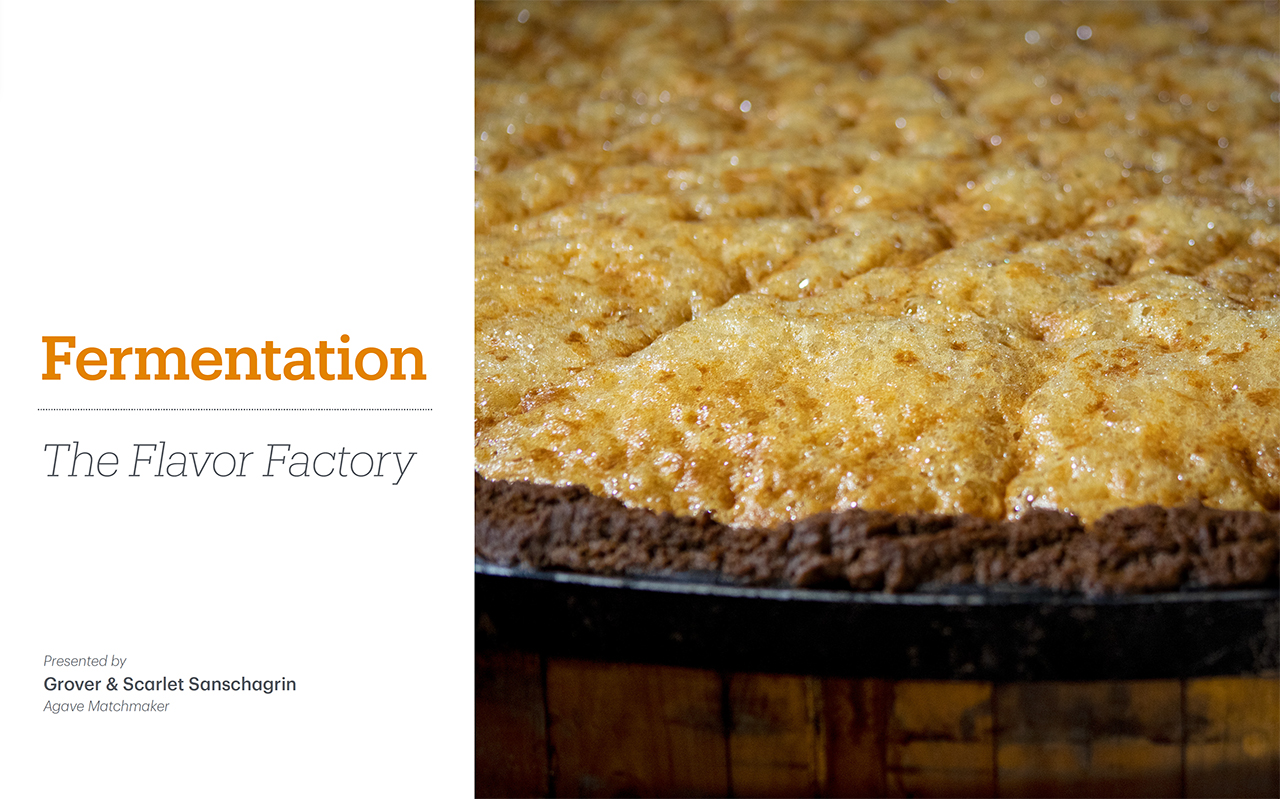
Fermentation: The Flavor Factory
Pour a glass of tequila, mezcal, or any well-made agave spirit and let it sit for a moment. As it opens, aromas begin to rise. Citrus, earth, herbs, maybe something floral.
All of that begins long before distillation. It begins in fermentation.
At its simplest, fermentation is when tiny living microbes eat sugars and turn them into alcohol, acids, and flavorful compounds
But in agave spirits like tequila, fermentation is not just a step. It is the moment when flavor is created.
More Than Sugar
In most spirits, fermentation is about converting sugar into alcohol.
In tequila, it goes further.
Agave brings its own chemistry into the tank. Hidden within the plant are aroma precursors that do not exist in the same way in grain or molasses. During fermentation, yeast unlocks these compounds and transforms them into recognizable flavors.
This is why tequila can express notes like citrus, herbs, minerals, and cooked agave. It is not just fermentation of sugar. It is fermentation of the plant itself
A Living System, Not a Controlled One
Modern spirits production often aims for precision and consistency. Fermentation is tightly managed and carefully controlled.
Tequila often takes a different path.
Many fermentations are intentionally non-sterile. Instead of a single cultured yeast, a mix of native yeast and bacteria participate. In some cases, fermentation happens spontaneously without added yeast at all.
This creates variability, but it also creates character.
The Influence of Fiber
Agave fermentation frequently includes solids from the plant itself. These fibers, known as bagasse, do more than fill space.
They bring:
-
nutrients
-
microorganisms
-
structural complexity to the tank
They also influence oxygen movement and help shape the formation of esters, the compounds responsible for fruity and sweet aromas
The result is a fermentation that is physically and chemically different from most other spirits.
When Yeast Struggles, Flavor Emerges
Agave must is not an easy environment for yeast.
It lacks consistent nutrients. It is often low in nitrogen. Its composition varies from batch to batch.
In response, yeast adapts.
Under these conditions, yeast produces glycerin as a way to protect itself. This compound helps regulate internal balance and allows the cell to survive under stress.
For the drinker, that stress translates into texture.
Glycerin contributes to a richer, fuller mouthfeel. It adds weight to the spirit and enhances the perception of body. In many traditionally made tequilas, this subtle viscosity is part of what makes them feel alive on the palate.
The Fly in the Fermentation Tank
One of the most overlooked contributors to tequila fermentation is not a microorganism, but an insect.
Drosophila mettleri, a species of fruit fly, has evolved alongside the agave plant
It lives in fermenting environments and thrives in the presence of alcohol. More importantly, it carries yeast in high concentrations within its body.
When these flies interact with open fermentation tanks, they introduce active yeast directly into the must.
This helps explain an important detail. There is yeast in the air, but not enough to reliably start fermentation on its own
The fly acts as a vector. It delivers the microbial life needed to begin the process.
In that sense, it becomes part of the terroir.
A Process in Motion
Fermentation unfolds in stages.
Yeast begins by adapting to its environment. It then multiplies rapidly, building a population capable of sustaining fermentation. Alcohol production follows, along with the creation of flavor compounds. Eventually, activity slows, and the system begins to decline.
Each phase changes what is being produced. Early stages favor growth. Later stages favor flavor.
Timing matters.
Bacteria and Balance
Bacteria are often seen as a problem in spirits production. In tequila, they can be part of the solution.
Lactic bacteria can soften acidity and contribute subtle dairy-like notes. Acetic bacteria can introduce sharper characteristics.
But there is a threshold.
If fermentation continues too long, bacteria begin to oxidize alcohol into acetic acid. This leads to vinegar-like aromas and the formation of a visible film on the surface of the liquid
The same organisms that create complexity can also create defects.
Understanding Congeners
Ethanol is only part of the story.
During fermentation, a wide range of additional compounds are created. These are known as congeners.
They include:
-
esters, which bring fruit and sweetness
-
acids, which add sharpness and structure
-
higher alcohols, which contribute floral and solvent-like notes
-
sulfur compounds, which can add earthiness or intensity
-
phenols and lactones, which introduce spice, vanilla, and richness
Together, these compounds define the aroma and flavor of tequila
Without them, tequila would be neutral.
Time and Its Tradeoffs
Fermentation speed has a direct impact on flavor.
Short fermentations tend to be clean but simple.
Moderate fermentations balance consistency and complexity.
Long fermentations can produce deeper, more expressive profiles, but they carry risk.
As time increases, so does microbial influence. Complexity grows, but so does the chance of unwanted flavors.
Where Flavor Is Made
Fermentation is where tequila becomes tequila.
It is where raw plant material is transformed into something expressive. It is where microbes, environment, and process intersect.
Every decision made during fermentation leaves a mark. Some are intentional. Others are the result of tradition, environment, or chance.
All of them shape what ends up in the glass.
This is why fermentation is not just a technical step.
It is the flavor factory.