High-Proof Heroes: The Science of Strength
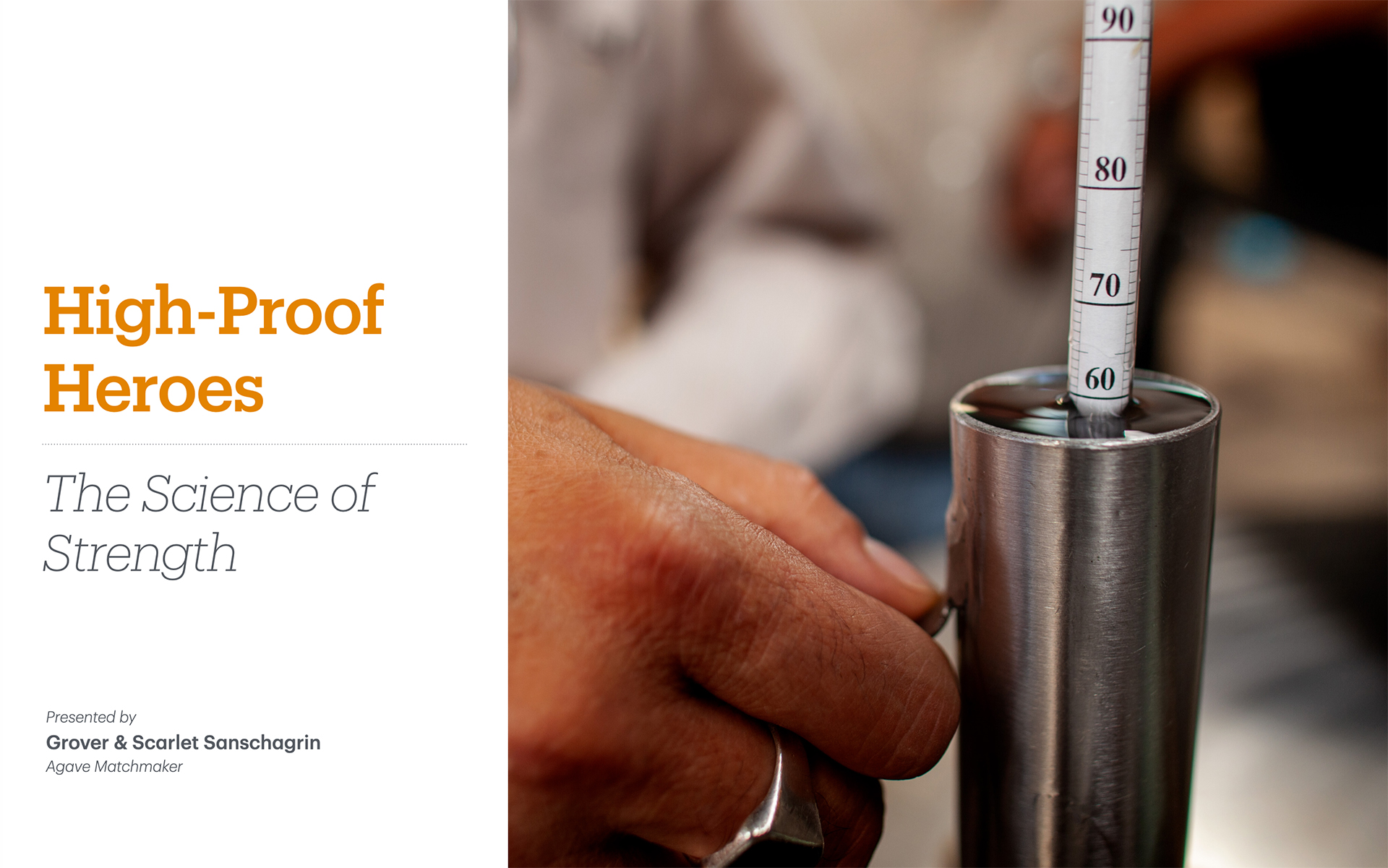
High-proof tequila has become one of the biggest trends in the agave spirits world.
Once viewed as a niche product for hardcore enthusiasts, high-proof expressions are now appearing everywhere. Distilleries are releasing still-strength bottlings, overproof blancos, and limited editions that proudly push past the standard 40% ABV.
At first glance, the appeal seems obvious.
More alcohol. More intensity. More flavor.
But high-proof tequila is more interesting than that. In fact, one of the biggest surprises is that higher alcohol can sometimes make aromas harder to smell.
To understand why people are so fascinated with high-proof tequila, you first need to understand what is happening inside the glass.
More Alcohol, Less Aroma?
It sounds backwards, but high-proof tequila can actually mute aroma.
The reason comes down to chemistry.
Inside every glass of tequila is a constantly shifting system made up of:
- ethanol
- water
- aroma compounds
These compounds are continuously interacting with each other. Some want to stay dissolved in the liquid. Others want to escape into the air.
And that matters because you can only smell what evaporates.
At higher alcohol levels, ethanol begins to dominate the system. It acts as a powerful solvent, holding onto many aroma compounds and preventing them from escaping easily.
At the same time, ethanol itself evaporates aggressively. The space above the glass becomes saturated with alcohol vapor, which can overwhelm your senses before subtler aromas have a chance to emerge.
This is why a high-proof tequila can initially smell “closed,” despite containing a large concentration of flavor compounds.
The flavor is there.
It is just temporarily trapped.
Why Adding Water Changes Everything
This is also why adding a few drops of water can dramatically change a tequila.
When water is introduced:
- ethanol concentration decreases
- aroma compounds loosen from solution
- volatility changes
Suddenly, aromas begin escaping more freely into the air.
Citrus appears. Herbs emerge. Sweet cooked agave becomes easier to detect.
Nothing new has been added.
You are simply unlocking compounds that were already there.
This is one of the reasons high-proof tequila has become so popular among enthusiasts. It creates an interactive experience. The tequila evolves as it rests, opens, or is diluted.
Rather than presenting a single fixed profile, high-proof tequila gives the drinker some control over how flavors are expressed.
Congeners: The Real Flavor of Tequila
Ethanol alone does not create flavor.
The real personality of tequila comes from compounds known as congeners. These are produced during cooking, fermentation, and distillation, and they are responsible for nearly everything you smell and taste.
Congeners include:
- esters, which create fruity aromas
- acids, which add sharpness and structure
- sulfur compounds, which can create earthy or funky notes
- higher alcohols, which contribute body and intensity
- phenols and lactones, which add spice, vanilla, and richness
At high proof, these compounds are often more concentrated. But concentration and accessibility are not the same thing.
A tequila can contain large amounts of flavor compounds while still hiding them behind alcohol.
The Mouthfeel Question
One of the most common descriptions of high-proof tequila is that it feels “thicker,” “oilier,” or “rounder.”
Many people assume this comes from glycerin.
That assumption is partially correct, but only partially.
Glycerin, or glycerol, is produced during fermentation when yeast experiences stress. Agave fermentations are naturally difficult environments for yeast because they are often low in nutrients and chemically inconsistent. In response, yeast produces glycerol as a survival mechanism.
Glycerol contributes:
- slight sweetness
- smoothness
- subtle viscosity
But there is an important limitation.
Most glycerol does not distill efficiently. It is not highly volatile, meaning most of it stays behind in the still. Only trace amounts make it into the final tequila.
So while high-proof tequila may contain slightly more glycerol due to less dilution, glycerol alone is not responsible for the heavier mouthfeel.
The real drivers are ethanol and concentration.
At higher ABV:
- liquid structure changes
- viscosity perception increases
- congeners become more concentrated
- the spirit coats the palate differently
Higher alcohols, fatty acids, and heavier compounds all contribute to texture and persistence.
In simple terms, high-proof tequila feels bigger because the entire system is more concentrated and less diluted.
Glycerol helps smooth the edges.
Alcohol and congeners create the structure.
Water Is Not Neutral
Water plays a much larger role in tequila than many people realize.
It is not just used to lower alcohol content. Water affects texture, aroma expression, and balance. The mineral content of water can subtly influence sweetness perception, mouthfeel, and finish.
This becomes especially important because producers do not all use water the same way.
Most tequila is distilled to a higher proof, often around 55% ABV, and then diluted with water before bottling at 40%.
But some producers take a different approach.
Instead of adding water at the end, they introduce water between distillations, while the spirit is still in its intermediate “ordinario” stage. The second distillation then brings the tequila down to its final bottling strength naturally.
This changes more than alcohol percentage.
It changes the chemistry of distillation itself.
Built vs. Adjusted
Distillation is controlled by volatility. Different compounds move into vapor depending on their relationship with ethanol and water.
When water is added before the final distillation:
- ethanol concentration inside the still decreases
- solvent behavior changes
- different congeners carry over into the final spirit
The resulting tequila often feels more integrated and cohesive.
Many distillers describe this as a softer or more naturally balanced profile. The water becomes part of the spirit’s construction instead of simply being added afterward.
By contrast, post-distillation dilution primarily changes perception rather than composition. It affects how flavors behave in the glass, but it does not fundamentally reshape the distillate itself.
Both methods are valid.
But they do not produce identical results.
Why Enthusiasts Love High-Proof Tequila
High-proof tequila appeals to enthusiasts for a reason.
It feels closer to the distillate itself. Less adjusted. More direct.
It also allows drinkers to explore tequila dynamically:
- neat
- rested
- diluted with water
Each approach reveals something different.
A standard 40% tequila often arrives as a finished statement. A high-proof tequila feels more like a conversation.
That interaction is part of the appeal.
The Bigger Picture
High-proof tequila is not simply “stronger tequila.”
It changes:
- aroma behavior
- flavor accessibility
- mouthfeel
- texture
- volatility
- perception
And in many ways, that is what makes it so compelling.
The alcohol does not remove flavor.
It hides it, concentrates it, reshapes it, and challenges you to uncover it.